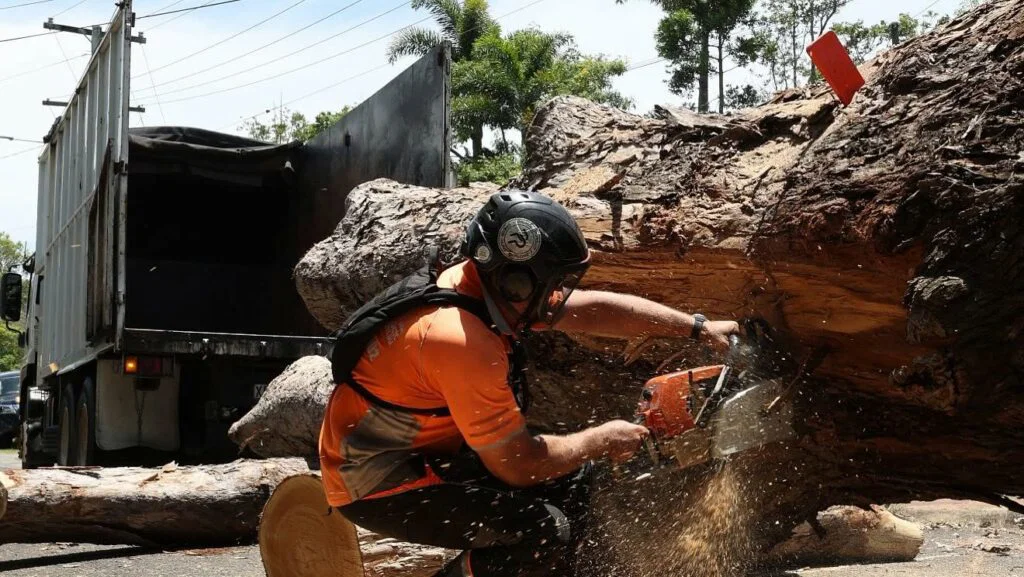
Storm season can place enormous pressure on trees that may already be struggling with structural defects, disease, root instability, or years of unmanaged growth. While healthy trees can often withstand challenging weather conditions, weakened trees are more likely to experience branch failures, canopy damage, or complete collapse during strong winds and heavy rainfall.
For property owners in Birkdale, identifying potential warning signs before severe weather arrives can help reduce safety risks, prevent property damage, and avoid expensive emergency work. Although not every tree requires removal, certain indicators should never be ignored.
Large Dead Branches Hanging Over Homes and Outdoor Areas
Dead branches are among the most common causes of storm-related tree damage. Large limbs can break unexpectedly when exposed to strong winds, potentially damaging roofs, vehicles, fences, sheds, and outdoor entertaining areas.
A small amount of deadwood may be manageable, but extensive dead branches throughout the canopy often indicate declining tree health and increased risk during storm season.
A Leaning Tree That Appears to Be Getting Worse
Some trees naturally grow at an angle, but a noticeable change in position can signal a more serious problem. Trees that begin leaning after heavy rainfall, strong winds, or construction activity may be experiencing root instability.
Warning signs often include exposed roots, lifting soil around the base, cracking ground, or visible movement during windy conditions. These issues should be assessed before severe weather places additional pressure on the tree.
Repeated Storm Damage Affecting the Same Tree
A tree that loses branches every storm season may be telling you something.
Recurring storm damage often points to structural weaknesses that continue to worsen over time. While damaged limbs can sometimes be removed, repeated failures may indicate the tree is becoming increasingly vulnerable and may no longer be suitable for its location.
Significant Decay Throughout the Trunk
Decay can dramatically reduce a tree’s structural strength.
Large cavities, fungal growth, hollow sections, splitting bark, and visible deterioration may all indicate internal decay. The challenge is that many trees appear healthy externally while serious deterioration develops inside the trunk.
Trees affected by extensive decay are often less capable of withstanding severe weather events.
Root Problems Affecting Stability
Healthy roots provide the foundation that keeps a tree stable.
Root damage caused by excavation, poor drainage, soil erosion, disease, or nearby construction can compromise a tree’s ability to remain upright. During periods of heavy rain, weakened root systems may struggle to support the weight of the tree.
Root-related issues are often overlooked until significant movement becomes visible.
Overcrowded Trees Competing for Space
Properties containing numerous mature trees can experience overcrowding within the canopy.
Competition for sunlight, water, and growing space may affect tree health while creating dense canopies that catch more wind during storms. In some cases, selective removal can improve growing conditions and reduce pressure on surrounding trees.
Palm Trees Showing Signs of Decline
Palm trees require different maintenance approaches than many traditional shade trees.
Dead fronds, unstable crowns, trunk deterioration, and previous storm damage can all increase risks during severe weather. Older palms showing signs of decline may require closer assessment before storm season begins.
Tree Services That May Help Before Storm Season
While tree removal may be necessary in some situations, other professional tree services can sometimes help reduce risks before severe weather arrives.
Tree Lopping
Tree lopping may be considered when significant canopy reduction is required to improve clearance around buildings, driveways, or neighbouring properties. Reducing excessive growth can sometimes minimise storm-related hazards.
Tree Trimming
Professional tree trimming helps remove deadwood, improve canopy balance, and reduce branch weight. Regular trimming can often improve tree structure and reduce the likelihood of branch failures.
Arborist Services
Arborist services provide expert assessments of tree health, structural stability, disease, decay, and root conditions. Professional inspections can help property owners make informed decisions before storm season.
Emergency Tree Removal
Severe weather frequently results in emergency tree removal situations involving fallen trees, split trunks, and dangerous hanging branches. Identifying vulnerable trees early may help avoid emergency call-outs.
Palm Tree Maintenance and Removal
Routine palm maintenance can help identify declining fronds, structural issues, and safety concerns before strong winds expose weaknesses.
Tree Stump Removal
Where removal becomes necessary, tree stump removal can help restore usable space and prepare the site for future landscaping improvements.
Land Clearing
Land clearing may be beneficial for heavily vegetated sites where overcrowding contributes to storm-related risks and limits property access.
Contact Chip Off The Old Block for Professional Tree Removal Services in Birkdale
Storm season can quickly expose weaknesses that may not be obvious during routine property maintenance. If you’ve noticed dead branches, structural defects, root instability, or signs of decline, it may be time to seek professional guidance before severe weather arrives. For property owners looking for professional Birkdale tree removal, Chip Off The Old Block provides experienced tree removal, tree trimming, arborist services, palm tree maintenance, emergency storm work, tree stump removal, and land clearing solutions tailored to local conditions. Contact our team today to arrange an assessment and address potential tree risks before storm season places additional stress on your property.